
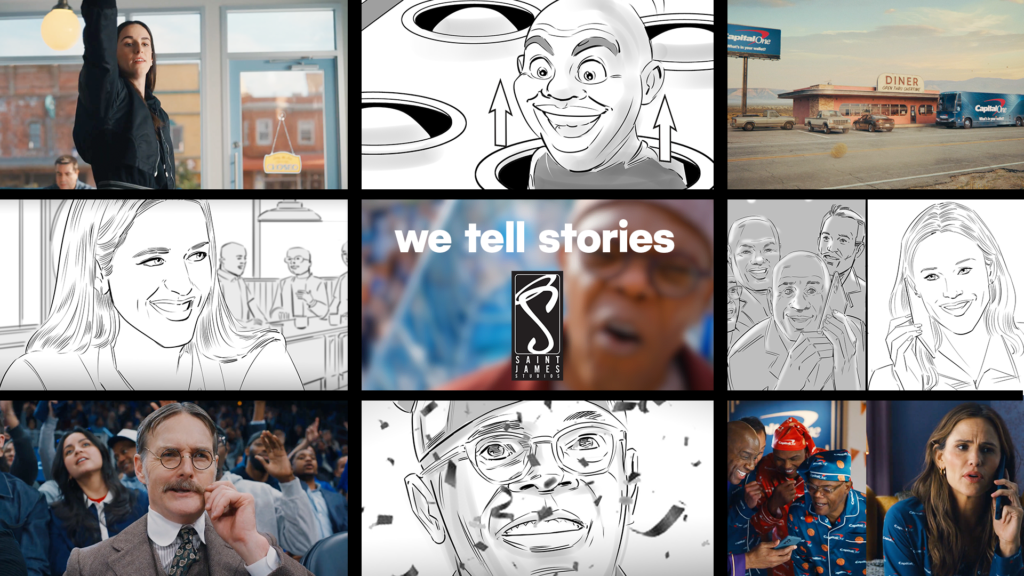
The Night the Legends Moved In – Storyboarding a March Madness Commercial with Star Power
When I first heard the setup, Samuel L. Jackson, Magic Johnson, Charles Barkley, Jennifer Garner, and Caitlin Clark all under one roof for a March Madness sleepover, I knew this one was going to be fun.
I also knew it was going to take a very steady hand to pull off.
Spots like this don’t work just because the cast is incredible. They work because there’s a clear creative vision holding it all together. In this case, that meant stepping into a campaign led by Bryan Buckley, a director known for orchestrating controlled chaos and making it feel effortless.
And of course, none of that scale happens without serious production leadership behind it. Matt Lefebvre, producer on the spot, was steering a complex production with precision, like an army general keeping every moving part in sync. That kind of producing is its own performance.
That’s where I came in, on the storyboarding side.
As the storyboard artist, I’m not making the big calls. I’m helping visualize the idea, support the director’s intent, and give the team something we can all see and build from before stepping on set. That’s the part I love, getting in the trenches with the script, finding the beats, organizing the reference, the location photos, and helping shape it into something that brings it to life. Essentially, translating creative ideas into a visual strategy that gives production teams the clarity and confidence to shoot!
Designing Comedy You Can Actually Shoot
What I appreciate about storyboards is that they sit right between imagination and production reality.
It’s not enough for something to read funny; you need to stage it in a way that works on camera. So for this campaign, I leaned into:
- strong visual contrasts
- clear reaction moments
- and a fast turnaround
Much of this campaign’s comedy lives in reactions, in how those big personalities play off each other. If you don’t design space for that in the storyboards, you risk losing what makes it work on set.
Bryan Buckley shines in this kind of environment. He’s a true ringmaster of tone and timing, balancing chaos and precision while bringing out authentic performances.
Alongside him, Matt’s producing work had to keep up with a production full of stars, expectations, and moving parts. Their collaboration set the tone for everything that followed.
My role was to help give that process shape before the cameras rolled.
A Note on Performance
One thing that really stood out to me watching the final spot was Caitlin Clark.
She’s obviously a generational talent on the court, but what surprised me here was how natural and relaxed she felt in this environment. There’s a lightness to her performance that I hadn’t really seen before, something playful and grounded at the same time.
That doesn’t happen by accident.
That’s direction. That’s creating a space where someone can just be and still serve the tone of the piece. Bryan clearly brought her into a natural and fun place, and it really comes through on screen.
And then there’s Chuck… who is just funny. Some people don’t need much help there.
Collaboration in Every Frame
Commercial storytelling is always a team effort. Storyboards evolve as creative conversations and ideas deepen, gags sharpen, beats shift, and production realities come into focus. That’s part of the process. Staying flexible and useful is part of the job.
The goal is always the same: to make storyboards into a shared language for everyone involved: directors, producers, agency teams, clients, and crew.
From blocking and eyelines to props, framing, and comedic rhythm, the boards serve as the visual foundation that holds production together and supports the bigger picture.
Not to lock anything down, but to give everyone a strong starting point.
Final Thoughts from the Drawing Board
In the end, even a powerhouse cast and production team need structure. That’s what visual development and pre-visualization (pre-vis) are for: bringing clarity to creative chaos.
As the storyboard artist, my job is simple:
Support the vision. Shape the idea before the cameras roll. Give the team a roadmap they can trust.
Because when you do, even a house full of legends can feel like kids again—for one unforgettable night.
Ready to Plan Your Next Spot?
The right storyboard artist doesn’t just draw your frames; they shape your entire production experience. Let’s make your next concept just as memorable, from first draft to final frame.
If you’re a commercial director, creative director, or executive producer looking to visualize your next campaign, Saint James Studios is here to help you take your idea from concept to sold. Reach out and let’s start building the boards that will win the room—and make your shoot day smoother from script to post.
 Producers…Hire the right storyboard artist (or regret it later).
 Directors…Which Style Storyboard Do You Prefer?