
When people think about storyboards, they often think about drawings. But the real product isn’t the drawings. It’s certainty.
The Challenge: Geography and Time Pressure
This FIFA campaign came together under extraordinary time pressure. The director was in the UK finishing another production while the agency, producers, and client coordinated from the United States. There wasn’t time for long creative meetings or multiple rounds of exploration.
On a late Friday afternoon, we met over Zoom to define the visual language of the spot. By the following morning (UK time), the first complete storyboard draft was already in the director’s hands. Notes came back immediately, revisions were completed over the weekend, and by Monday morning, the production had a refined visual roadmap they could start executing.
A Visual Roadmap of New Jersey
The challenge wasn’t creating elaborate visual effects.
The challenge was geography.
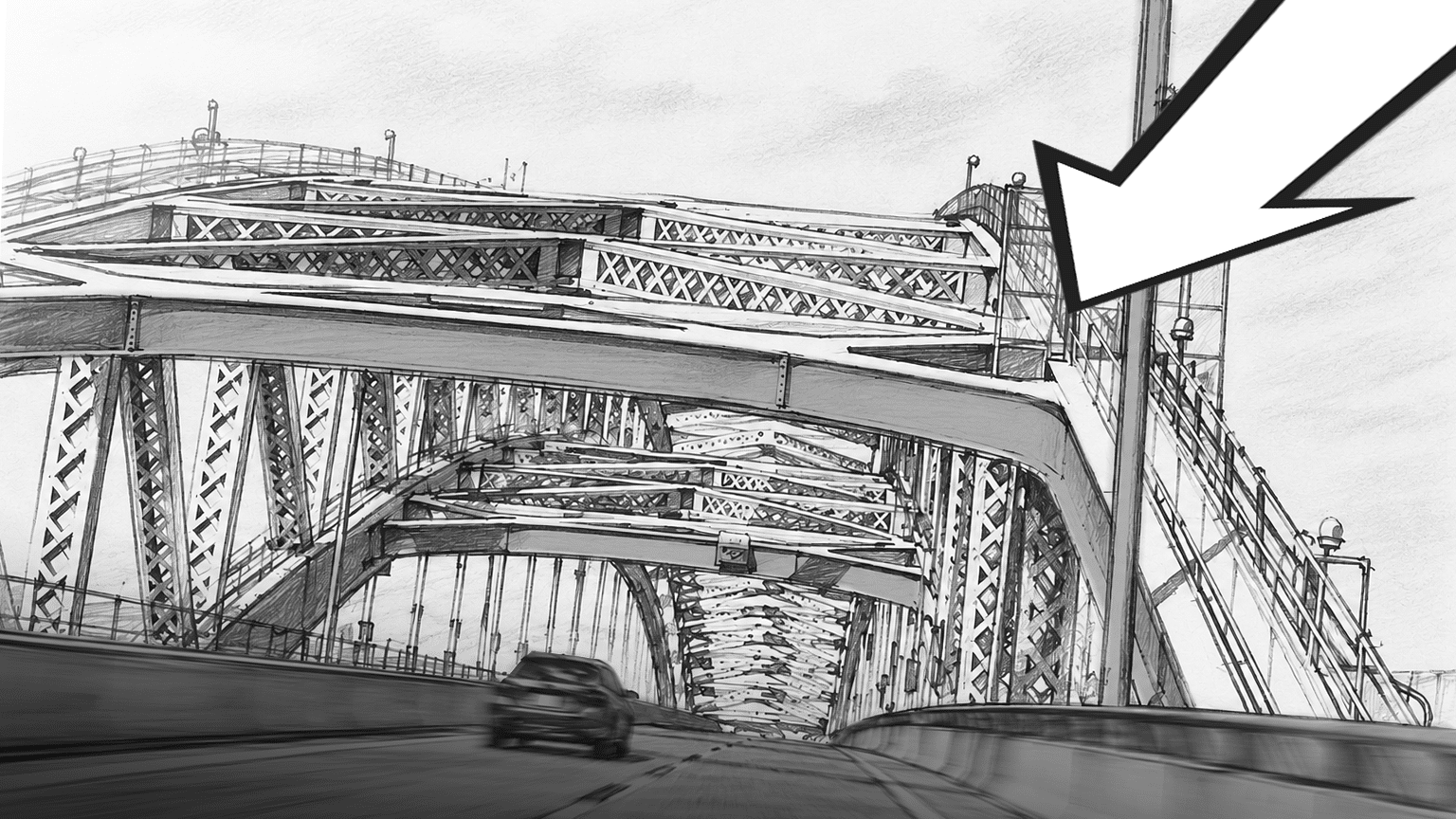
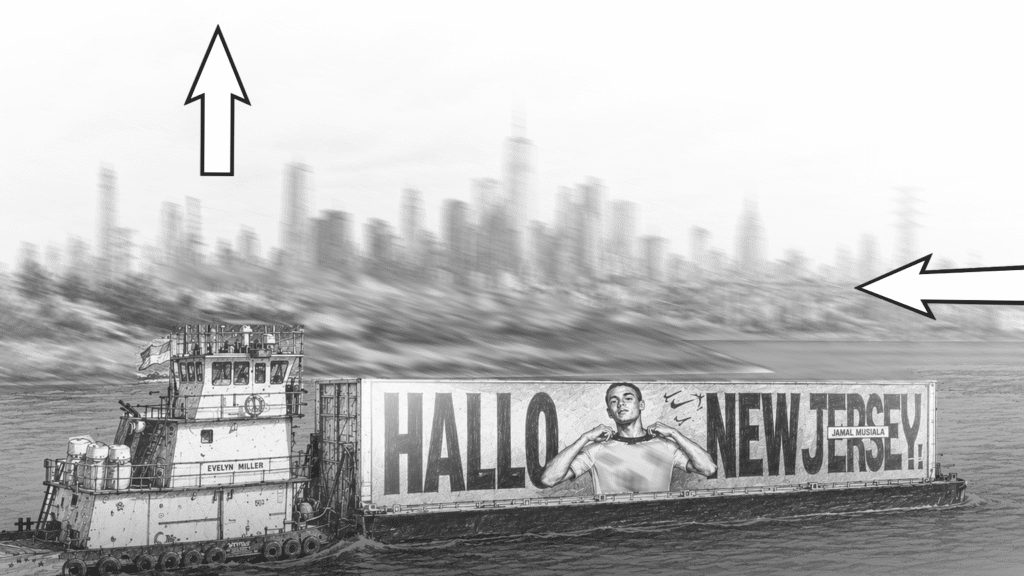
The commercial needed to communicate a believable journey into New Jersey while showcasing recognizable landmarks, including the Bayonne Bridge, I-95, Newark Airport, Jersey City, the Jersey Shore, and the Manhattan skyline, without locking production into a rigid shooting plan. That meant the geography had to stay clear, but the production plan had to stay flexible.
The boards became more than shot lists. They became a production strategy, shaping how the team could move from planning to execution.
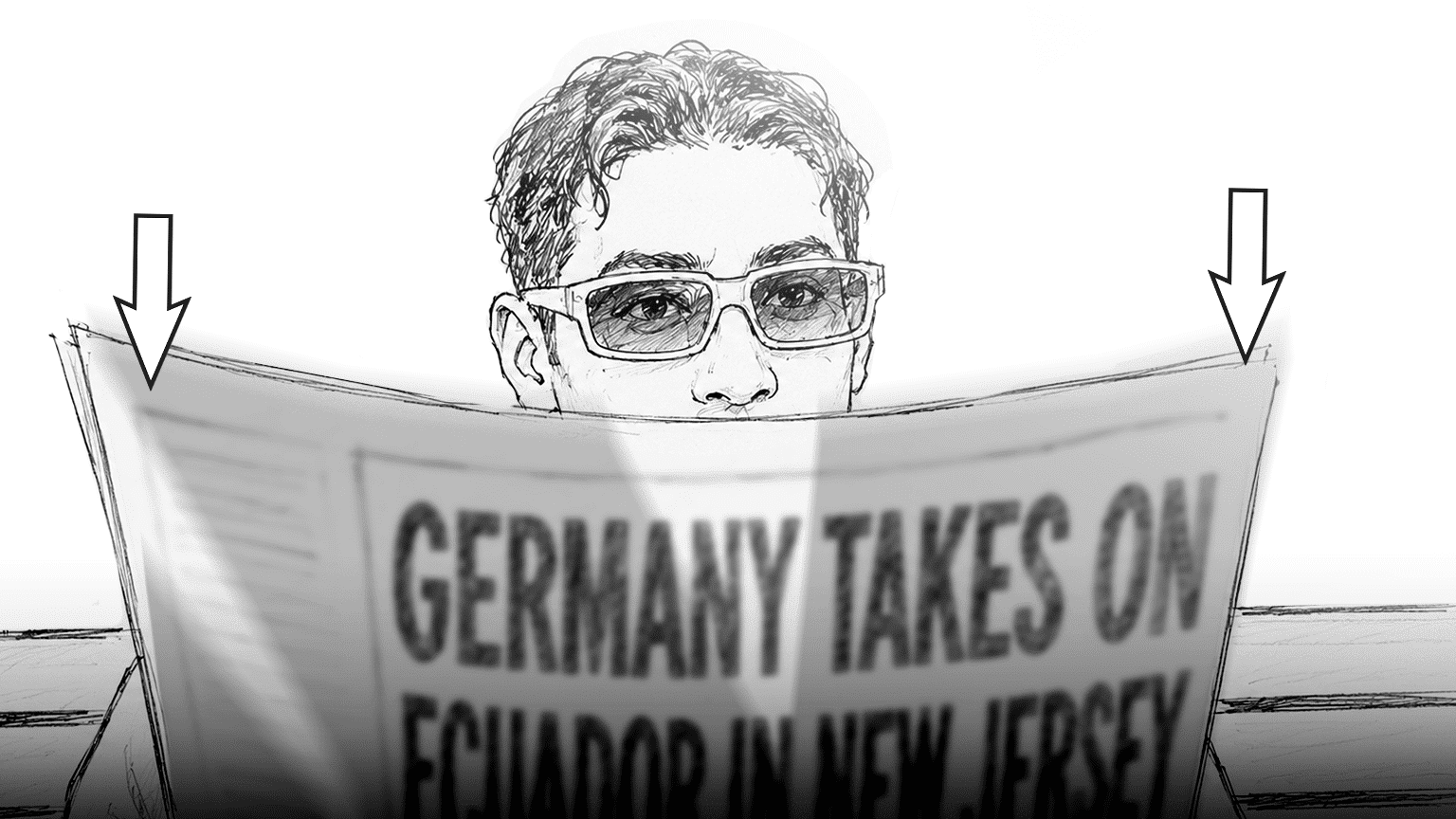
Every sequence was designed to suggest movement while staying flexible enough for the crew to capture Achraf Hakimi, Mario Götze, and the lead talent wherever logistics, permits, weather, or scheduling made the most sense. Some shots were tied to specific landmarks. Others intentionally left room for interpretation so production could adapt without losing the story. That flexibility protected both the schedule and the budget.
Compressing the Creative Process
The project also included aerial concepts ranging from drone coverage to helicopter and barge photography, allowing the production team to evaluate several approaches before cameras ever rolled. Even the lone visual-effects sequence—a graphic element appearing on a tugboat—was explored during storyboarding and ultimately shaped several shots in the finished commercial.
Perhaps the biggest technical win wasn’t a visual effect at all.
It was compressing the creative process from weeks to days.
The commercial was being shot while it was being edited and reached the public within a week of the boards being completed, an incredibly fast turnaround for a global campaign. That pace is only possible when everyone is working from the same visual blueprint, and that shared reference kept the process moving cleanly from boards to screen.
At Saint James Studios, that’s always the goal. Storyboards aren’t simply illustrations. They’re the first successful version of the commercial because they turn planning into a clear path forward.
They’re the first working version of the commercial.
When the planning is right, the production can move with confidence—even when the clock is working against everyone.
 Producers…Hire the right storyboard artist (or regret it later).
 Directors…Which Style Storyboard Do You Prefer?